
Introduction: From Rush to Results in Robotics Parts
You can level up faster than you think. Picture a small factory racing to fill orders on a new line—robotics parts stacked on the bench, team on standby, clock ticking. In the first hour, the team swaps drives, wires new robotic components, and boots the controller (coffee still warm). Data says up to 22% of early failures in automation come from mismatched interfaces and tuning gaps, not bad hardware. So here’s the rub: if speed is your edge, why do those first wins fade after week three? Are you missing simple signals hidden in setup logs and cycle times? You’re stronger than the chaos. Set your stance, breathe, and focus on what moves the needle—alignment, not guesswork.
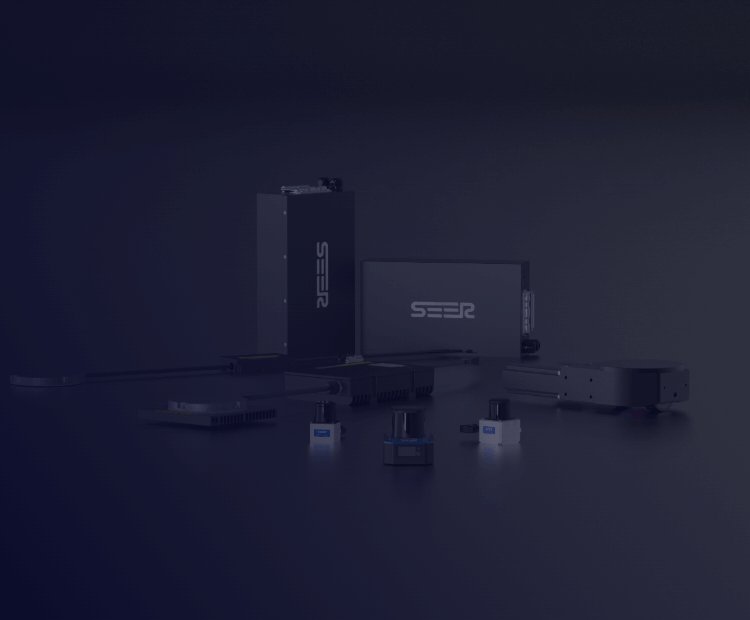
Let’s be real—short bursts feel great, but sustainable output is a different game. The question is not “Can you install faster?” It’s “Can you maintain torque accuracy, uptime, and traceability under load?” That’s where smarter choices around mechatronics and data hooks matter. Ready? Here’s where the real bottleneck hides—let’s unpack it.
Part 2: What Traditional Fixes Get Wrong
Where do legacy setups fall short?
Legacy thinking says: bolt on new drives, map the I/O, and hope tighter loops fix the wobble. But the flaw sits deeper. Many kits lock you into mixed vendors with different fieldbus timings, uneven EtherCAT scan cycles, and closed firmware. That makes real-time behavior drift when you add axes or change payload. You feel it as jitter on corners and heat creeping in the cabinet. Even with quality power converters and torque sensors, a mismatched kinematics solver can mask errors until throughput drops. Look, it’s simpler than you think: the problem isn’t the single part; it’s the chain—controllers, motion stacks, and diagnostics that won’t speak the same language.
Users also hit silent pain points. Tuning feels endless because the tools don’t expose phase delays in the loop. Edge computing nodes get added for analytics, but data labels are inconsistent across brands, so your SPC charts lie by omission—funny how that works, right? Changeovers lag because homing routines and safety states aren’t modular. And when downtime hits, you dig through three support portals to trace one fault code. If you’re comparing robotic components only by torque and IP rating, you miss total cycle control: time-synced motion, standard diagnostics, and predictable behavior as the cell grows. That’s the deeper layer many teams skip under deadline pressure, and it costs real margin.
Part 3: Comparative Insight—New Principles for Future-Ready Cells
What’s Next
Shift the comparison. Instead of “Which motor is stronger?” ask “Which stack keeps timing honest when we scale?” The next wave of robotic components follows three principles. First, deterministic by design: motion, vision, and safety ride on a synchronized backbone with hard latency bounds, not best effort. Second, transparent control: open diagnostics and model-based tuning expose loop delays and friction so you fix root cause, not symptoms. Third, modular resilience: axes, IO, and sensing swap without rewriting the whole line. In practice, that means ROS 2 interfaces where they help, a real-time scheduler that respects deadlines, and clean bridges to EtherCAT without mystery offsets.
Consider a palletizing cell moving from two to five axes. Old path: retune each joint, chase oscillations, and accept small drops in throughput. New path: drop-in drives with shared time base, harmonized safety states, and auto-mapped device profiles. The kinematics solver knows payload changes, updates feedforward on the fly, and logs deviations you can act on. Maintenance gets a live timeline view: power spikes, thermal trends, and alert causes in one pane. You compare options not just by datasheet stats but by stability under step changes, recovery after faults, and clarity of diagnostics. And yes, the test is simple—create a payload jump, measure settle time and path error under load. If your robotic components don’t hold those marks, you’ll feel it as weekend repairs and missed ship windows.

To wrap this up with something you can use today, here are three metrics to evaluate before you buy: 1) deterministic latency under load (95th and 99th percentile, in milliseconds), 2) diagnostic coverage out of the box (sensor health, loop delay, thermal margin), and 3) lifecycle cost per axis, including energy use and tuning time. Keep the tone steady, compare apples to outcomes, and you’ll spot the right upgrade path—fast. The story isn’t about shiny parts; it’s about coherent systems that scale without drama. Keep your team focused, keep the loop tight, and let data call the plays—because dependable motion is a habit, not a hope. Learn, test, and move forward with partners who share that mindset, like SEER Robotics.